
A Race Like No Other
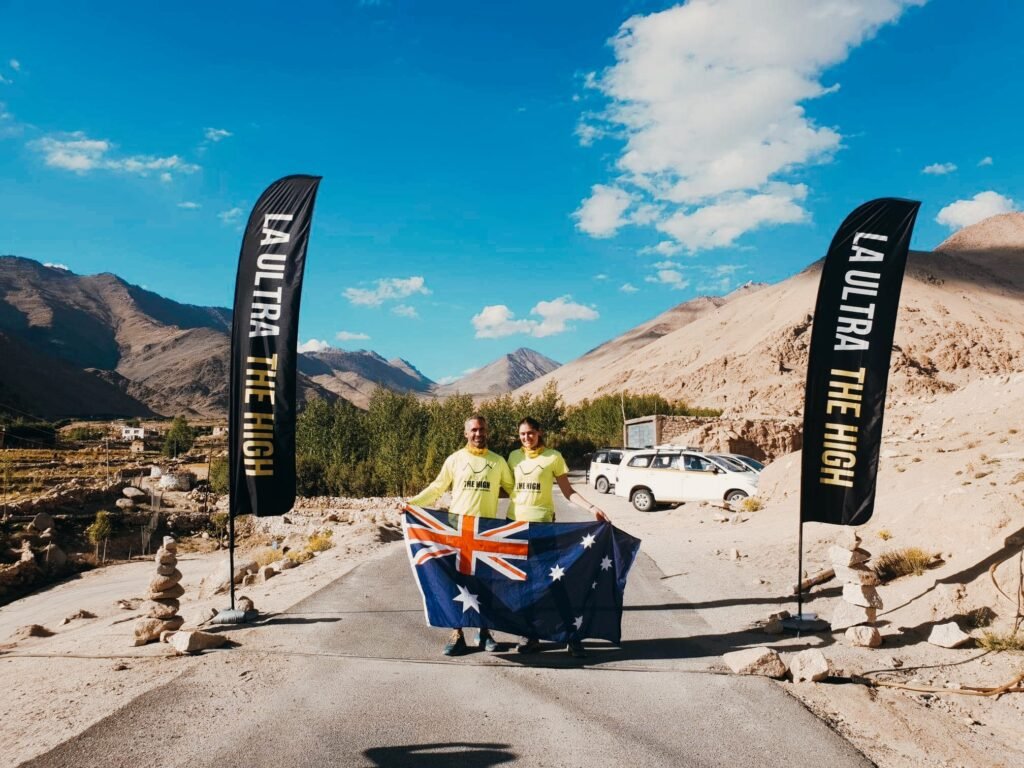
Many of you may not know this, but Jase is an ultra-marathon runner. And not just any ultra-runner – he takes on the kind of races that make most people question his sanity. Back in 2018, life threw some challenges our way, and we knew we needed a reset. So what did we do? We packed up our lives and hit the road, with our first stop being Leh, India, for a 222km race through the Himalayas.
Yep. You read that right- 222km. At altitude. Through one of the most breathtaking yet unforgiving landscapes on Earth.
Leh had never been on our radar, but the race brought us there, and honestly, it blew our minds. It’s a place I’d go back to in a heartbeat, this time with Chloe, to explore it all over again.
Now, I know what you’re thinking: How the hell do you run 222km? Well, Jase is, in a word, insane. No, just kidding (kind of). What he does have is an unshakable mindset – one of the strongest I’ve ever seen -and that’s half the battle. Mental grit is everything in races like this. And if you think 222km is wild, the following year he went back and ran 555km. Meanwhile, I was six months pregnant and had to sit that one out (probably for the best!).
Altitude & Acclimatisation
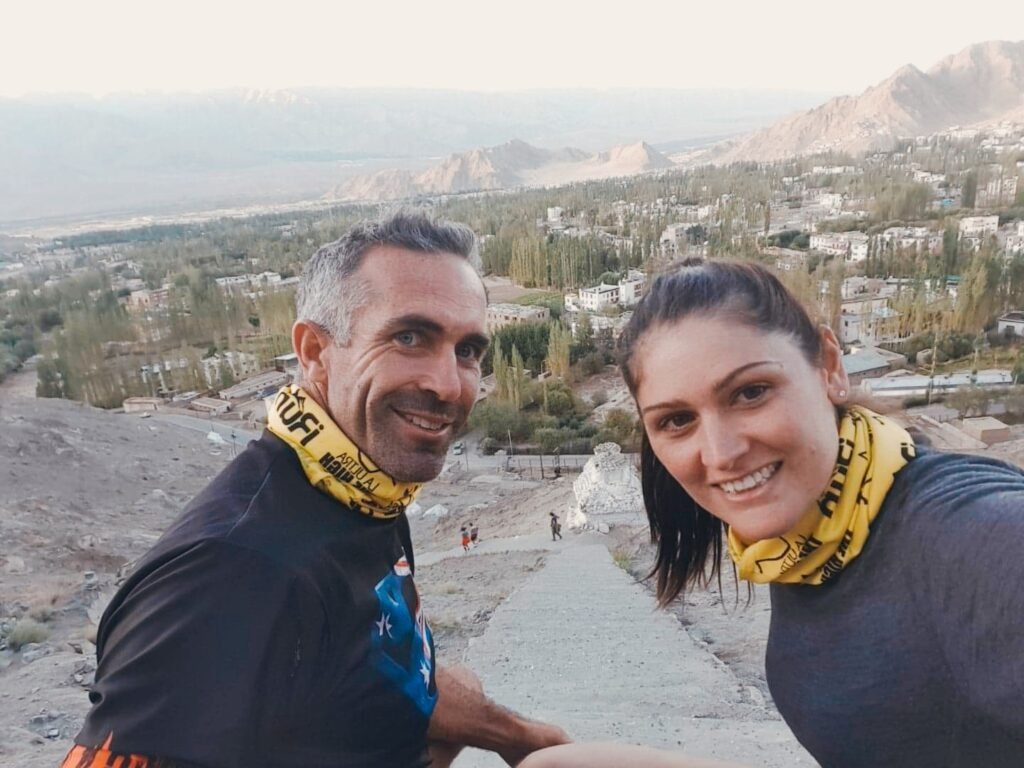
Let’s talk altitude. The town of Leh sits at 3,500m, meaning you’re literally landing in the mountains and between mountains. We arrived three weeks before the race to acclimatise, spending time at even higher altitudes to prepare for what was ahead. For those who want more details on Leh itself – permits, overnight trips, and general info – I’ve written other blog posts covering all that.
The Race
The La Ultra race was created by an Indian sports doctor who wanted to push the limits of human endurance. Mission accomplished.
The course started in Nubra Valley, just north of Khardung La (5,359m), before climbing over the pass, descending through Leh, crossing the Indus River (twice), and then winding up and down Wari La (5,312m). The whole route is heavily monitored, with a strong army presence.
Not many people are crazy enough to attempt this, but every year, more runners are drawn to the challenge.
The Start – Into the Darkness
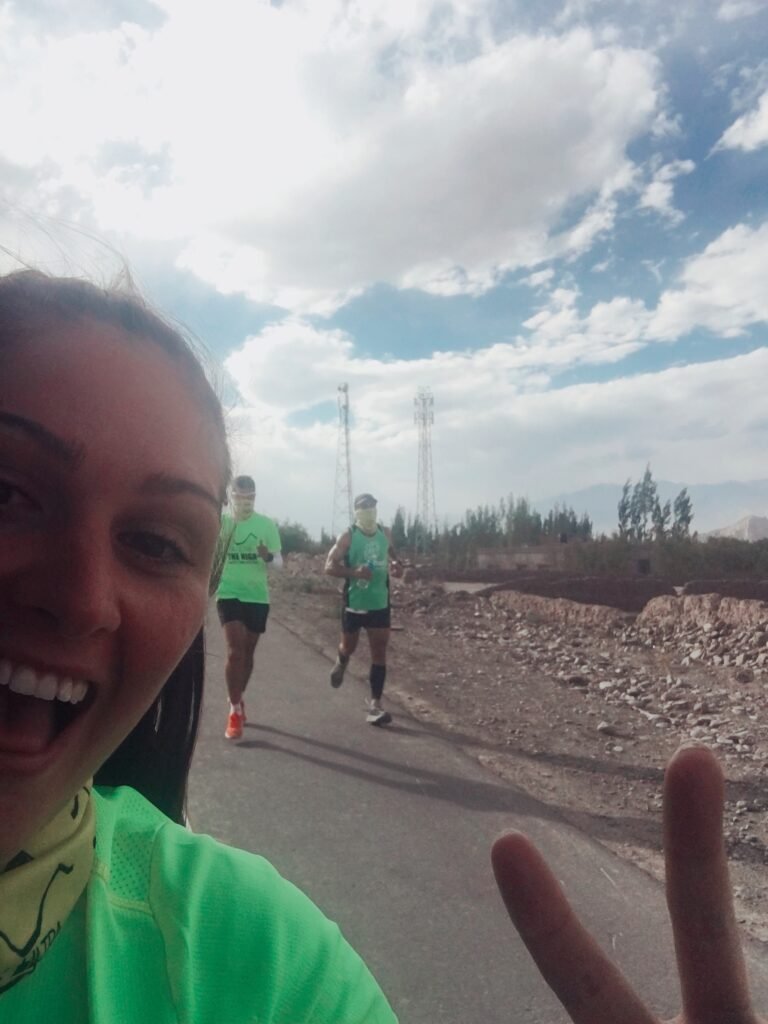
The race kicked off in the evening, with runners tackling Khardung La in the dead of night. There was a checkpoint just before the pass, but no external support – just runners, their backpacks, and a whole lot of mental toughness.
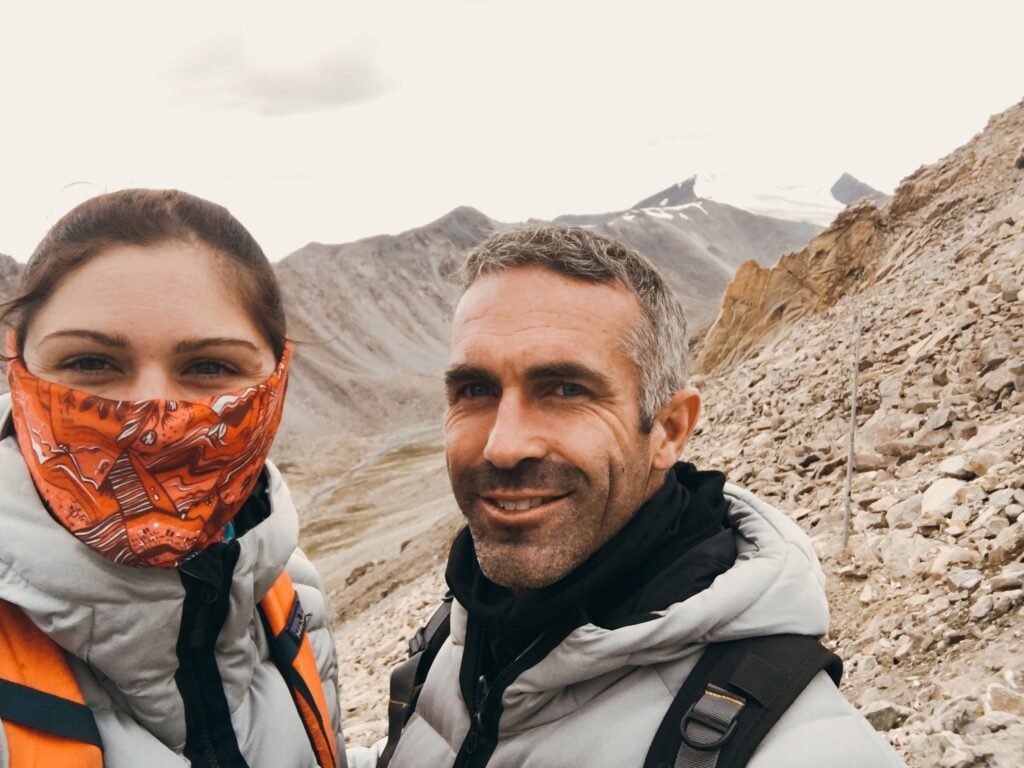
August in the Himalayas means cold nights, but Jase was lucky – no snow this year (though in 2019, during the 555km race, it did snow). We met him on the Leh side of Khardung La at South Pullu, where his crew (including me) could finally join him. Seeing the pass completely empty – normally jam-packed with cars, motorbikes, and army trucks – was surreal.
Surviving the Elements
Running 222km through the Himalayas means dealing with everything from freezing cold to scorching heat. The crew car was packed with layers for all conditions, nutrition, cooking equipment, sleeping bags, and, most importantly, a team to keep Jase’s head in the game. Sleep deprivation and altitude can cause some wild hallucinations, so mental focus was key.
From South Pullu, it was a long downhill stretch to the river crossing, and by then, the heat was kicking in. Jase stopped occasionally for food and hydration, but otherwise, it was a smooth stretch. I even started running alongside him for parts of it.
By the time we hit the flat section along the Indus, the real grind began. What looked like a straightforward stretch took 12 hours to run. The crew and I took turns pacing him to keep him going. By nightfall, Jase had had enough. At around 8 or 9 pm, we pulled over, let him sleep for 30 minutes, and refueled. He was so exhausted he literally passed out on the side of a 20m cliff.
Running Through the Night
After his short rest, we pushed on, crossing the river again. Hunger kicked in hard, so while I paced Jase, the crew went ahead to find food. That left us running in complete darkness, just the two of us, surrounded by stray dogs, mountains, and the eerie glow of unknown eyes watching us. No cars. No people. Just silence.
Finally, the crew car rolled up with momos (dumplings). But here’s a tip – when an Indian vendor says the food is “mildly spicy,” they mean set-your-mouth-on-fire spicy. Even so, we ate, refueled, and kept moving.
The Final Push
At 2 am, Jase finally gave in to sleep. We found a guesthouse in Sakti, let him rest for a couple of hours, patched up his blisters, and set off again just before dawn. As we left, the next 222km runner arrived—proof of just how brutal the race was.
The final leg up Wari La was still another 12 hours of running. Looking at a map, it doesn’t seem like much—just a zig-zagging road through the mountains. But in reality? It was a mind-bending battle. The finish line was at the bottom, and while Jase had a solid lead, we could actually see the second-place runner in the distance, making it feel like a never-ending chase.
After what felt like an eternity, Jase crossed the finish line in first place.
The Experience of a Lifetime
This race was an incredible challenge, and Jase absolutely rose to meet it. His focus, resilience, and sheer determination were next level, and as his crew, we did everything we could to keep him moving.
But it wasn’t just his race – it was a life-changing experience for me too. This was the beginning of something bigger. The start of our travels. Not just holidays, but real, immersive, perspective-shifting journeys.
If you’re interested in this race, check out the documentary Moving Mountains, which covers the 555km version – the one Jase went on to win the following year (when it snowed on Khardung La!).
And if you ever find yourself in Leh, go explore. It’s a place that will stay with you forever.
More adventures to come. @thereardonfamily